
Intelligence Highlights
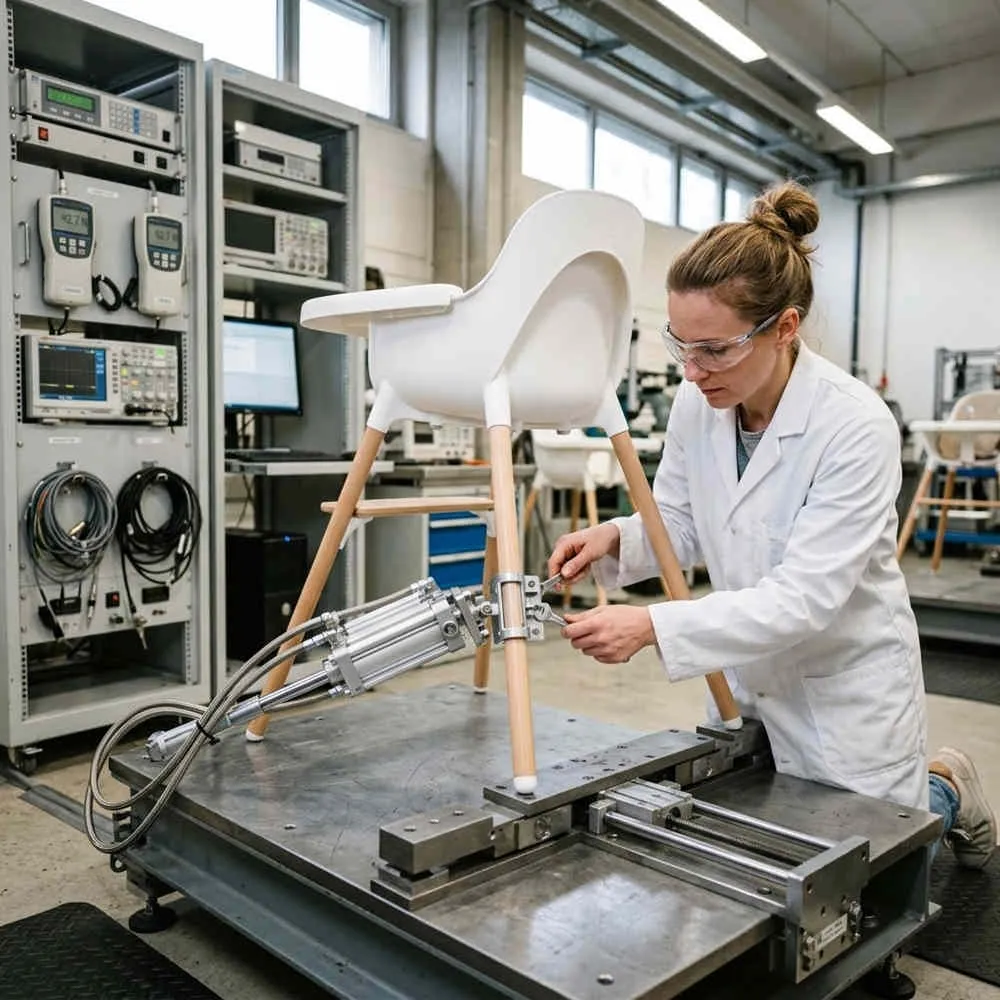
The EU’s current product-safety framework places greater emphasis on documented product safety, traceability, and risk management. For children’s high chairs, the European Commission now references the updated EN 14988:2017+A2:2024 standard in support of the General Product Safety Regulation.Stability-Tested High Chair Wholesale now starts with one question: does the EN 14988 report cover the actual production model, configuration, and safety features the buyer intends to place on the EU market?The European Commission will withdraw the previous EN 14988:2017+A1:2020 reference on 27 October 2027, giving economic operators a transition period while the revised standard comes into use.EU High Chair Compliance Outlook for 2026
What Changed in 2026
The EU General Product Safety Regulation (Regulation (EU) 2023/988, or GPSR) has applied since 13 December 2024. It establishes the current general framework for the safety of consumer products placed or made available on the EU market. The Regulation requires economic operators to place or make available only safe consumer products.For children’s high chairs, an important development came in April 2026. The European Commission’s Implementing Decision (EU) 2026/901 published the reference to EN 14988:2017+A2:2024 — Children’s high chairs: Requirements and test methods. The Commission states that the revised standard satisfies the relevant general safety requirement under Article 5 of the GPSR for the risks the standard covers.The updated standard replaces the previous EN 14988:2017+A1:2020 reference. The older reference will remain valid until 27 October 2027, giving manufacturers, importers, and other economic operators time to prepare for the revised standard.See the European Commission’s Implementing Decision (EU) 2026/901.Why This Matters for Importers
For an importer, a test report is useful only when it represents the product the factory actually delivers. Changes to the frame, legs, tray, restraint system, folding mechanism, materials, or other safety-related components can affect the relevance of previous test documentation.This is why buyers should review compliance documentation before approving a production order rather than treating testing as a final paperwork exercise.The GPSR also places responsibilities on economic operators beyond the physical safety of the product, including information, traceability, and cooperation with market-surveillance authorities. The exact obligations depend on the role of the business in the supply chain.What Dutch Market Surveillance Shows
Dutch market surveillance also illustrates why mechanical safety deserves attention. In May 2025, the Dutch consumer product safety authority NVWA published a safety warning for the Bugaboo Giraffe high chair after screws in the chair legs could loosen, allowing the legs to separate from the frame and creating a fall hazard for a child.This was a product-specific safety action, not a general EU import ban. For buyers, however, it is a useful reminder that structural integrity, stability, and fall prevention are practical product-safety issues—not simply items on a laboratory checklist.View the NVWA safety warning.Where Sourcing Risk Builds
Compliance risk can begin before a product reaches the market, especially where production components drift from the tested sample. A tray resin substituted after testing, ageing leg plastics, or a downgraded latch can each change how a chair behaves in real use.The practical solution is to freeze the tested specification and audit every later component or material change against the original report.Factory Evidence Audit
Before placing an order, ask the supplier for the relevant high chair safety documentation and check that the documents correspond to the product specification you plan to purchase.- Product identity: Confirm the model number, production version, and key configuration details shown in the report.
- Standard reference: Confirm which EN 14988 version the report cites and whether it fits the current compliance strategy.
- Test laboratory: Review the laboratory name, report number, issue date, and scope of testing.
- Test configuration: Confirm that the tested product configuration corresponds to the production version, including relevant structural and restraint components.
- Production consistency: Review later design or component changes instead of assuming an older report covers the modified product.
High Chair Safety Checks for EU Importers
(Scroll horizontally to view the full sourcing checklist →)
| Area | What to Verify | Supplier Evidence |
|---|---|---|
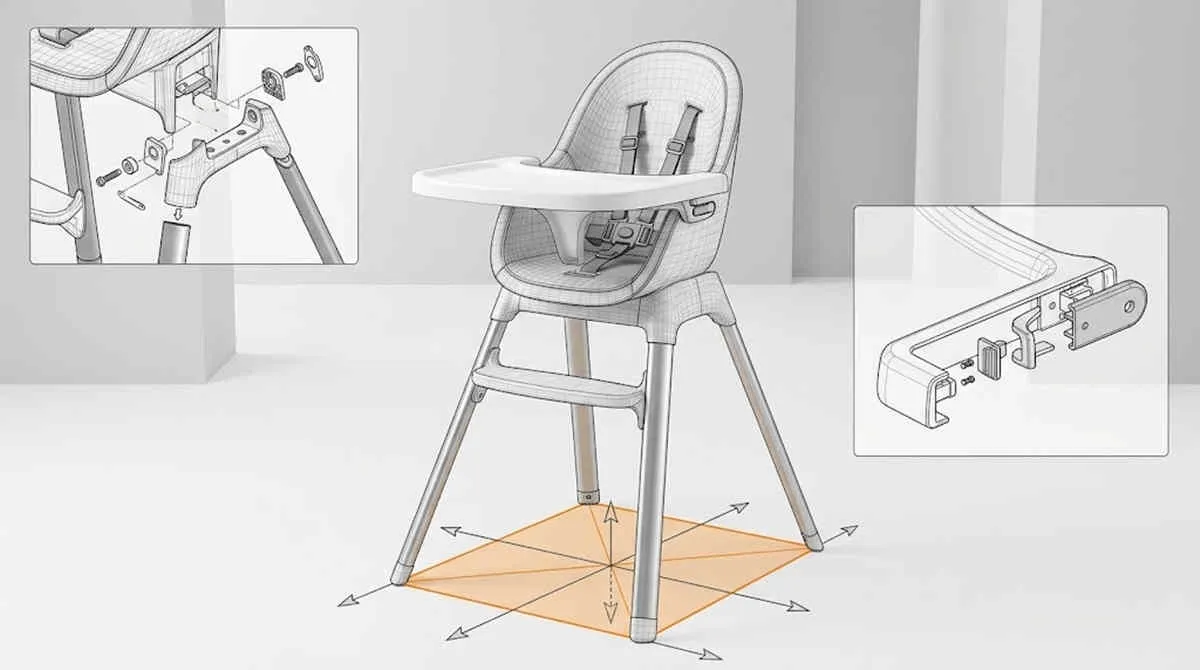
| Base & Legs | Stability, resistance to tipping, and structural integrity under the applicable test programme | Relevant test reports and production specifications |
| Seat & Restraint System | Harness, buckle, attachment points, and child-retention features | Applicable test results and component specifications |
| Tray & Attachments | Attachment security, structural strength, and safe interaction with the chair | Test documentation and production inspection records |
| Folding & Moving Parts | Locking mechanisms, unintended movement, and relevant entrapment or pinch-point risks | Design specifications and applicable test results |
| Production Model | Consistency between the tested configuration and the product being manufactured | Model-specific documentation and production records |
EXPERT INSIGHT:
BABYLOVI R&D TEAM
“European compliance is easier to manage when buyers review the product specification and test documentation together. Our focus is to help buyers verify the production model, supporting test records, and key safety-related components before shipment.”
✓ VERIFIED R&D INSIGHT
High Chair Sourcing FAQs
What is the current EU standard for children’s high chairs?
As of 2026: The European Commission has published the reference to EN 14988:2017+A2:2024, titled “Children’s high chairs — Requirements and test methods,” in support of the EU General Product Safety Regulation. It will withdraw the previous EN 14988:2017+A1:2020 reference on 27 October 2027.Does the new EN 14988 standard mean high chairs are subject to a new EU import ban?
No. The 2026 Commission decision concerns the publication and transition of European standards supporting the GPSR. It does not create a blanket EU import ban on high chairs. Importers should instead make sure that the products they place on the EU market are safe and that their compliance documentation is appropriate for the products supplied.What should importers check on a high chair test report?
Start with product identity and scope. Check the model number, configuration, test laboratory, report date, applicable EN 14988 version, and the tests the report covers. The documentation should match the actual production model in your order.Why does production-model matching matter?
Because product changes can affect safety. A different frame, leg design, tray attachment, folding mechanism, restraint component, or other safety-related change may affect the relevance of existing test documentation. Buyers should review significant changes rather than assuming an older report automatically covers a modified product.How can a supplier help with EU high chair compliance?
A good supplier should make verification easier. Buyers can ask for the relevant test reports, product specifications, model identification, and production quality records before approving an order. Buyers can also review Babylovi’s high chair wholesale catalog alongside the applicable product documentation when evaluating OEM or ODM sourcing options.