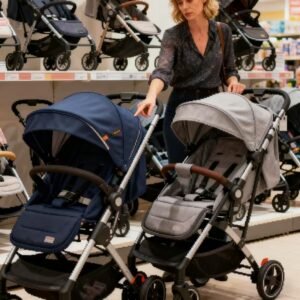
When we become parents, we need to prepare a lot of baby products. At this point, an inevitable question arises: “What is a stroller?”. A stroller is a wheeled vehicle designed for pushing infants and young children. It’s more than just a transportation, it’s also an essential part of daily life with a child. Acting as a mobile base for naps, meals, and outings, it helps parents stay active while keeping their little one safe and comfortable.
Choosing the right stroller is one of the first and most important decisions for new parents. It affects everyday convenience, safety, and adaptability to your lifestyle. The right stroller simplifies outings and encourages adventure, while the wrong one can lead to frustration. Making an informed choice ensures your stroller becomes a trusted partner throughout the early years of parenting.
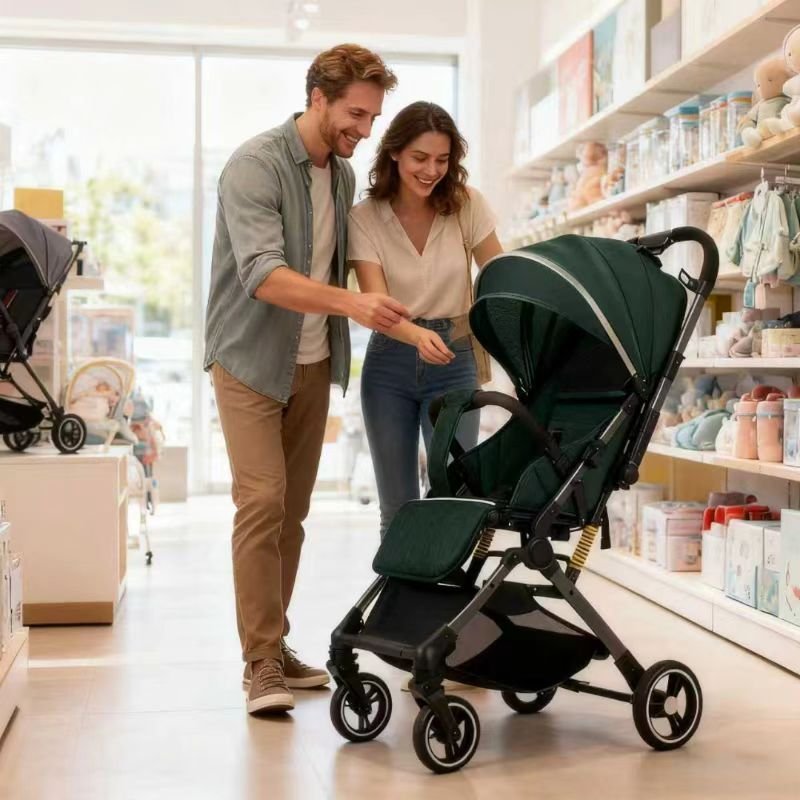
Definition Of “What IS A Stroller”
“Strollers” are used for small children up to about three years old in a sitting position facing forward. Modern strollers are engineered systems that prioritize safety, comfort, and convenience. The essential components work together to create a secure environment.
- Canopy: An adjustable cover that protects the child from sun, wind, and light rain.
- Frame: The sturdy skeleton, typically made from aluminum or steel, provides structural integrity.
- Seat: The padded area where the child sits or lies, often with multiple recline positions for comfort.
- Harness: A safety system, usually a five-point harness (two shoulder straps, two waist straps, one crotch strap), that securely restrains the child.
- Wheel: Provide mobility; their size and type (e.g., swivel vs. fixed, air-filled vs. plastic) determine maneuverability and ride smoothness.
- Brakes: A crucial safety feature, typically a foot-activated mechanism that locks the rear wheels to prevent the stroller from moving.
Types Of Strollers
Selecting the right baby stroller depends largely on your lifestyle. Here’s a quick overview of the most common types
Standard/Full-Size Strollers
Ideal for everyday use, these offer full recline, large storage baskets, and sturdy construction. They are versatile but can be heavy and bulky.
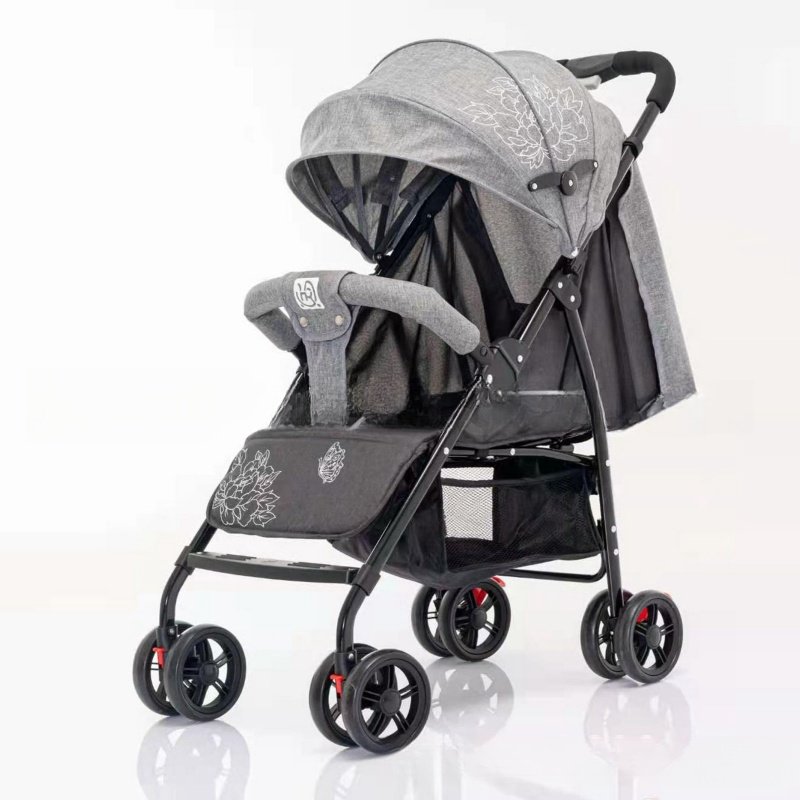
Lightweight/Umbrella Strollers
Best for travel and quick trips, these are compact and easy to carry. However, they often have limited recline and storage.
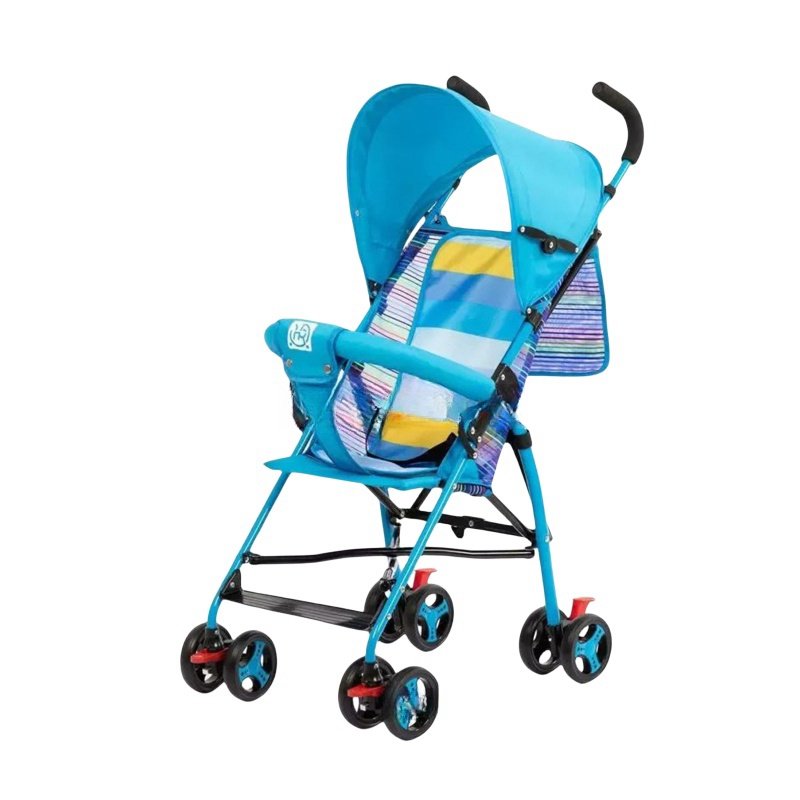
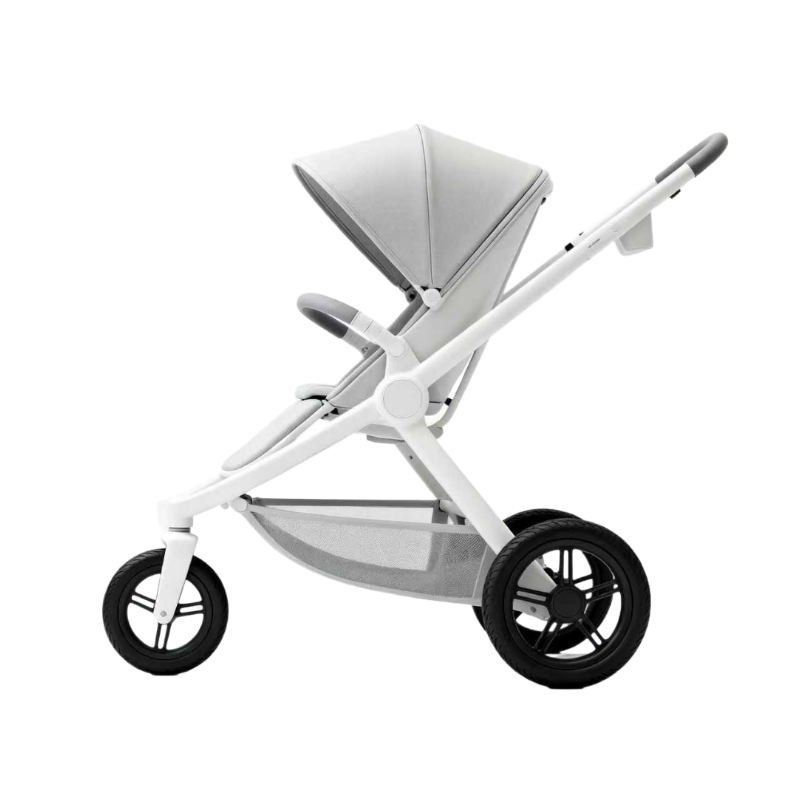
Jogging Strollers
Designed for active parents, they feature three large wheels and excellent suspension for smooth rides on uneven terrain. Not all models are suitable for newborns.
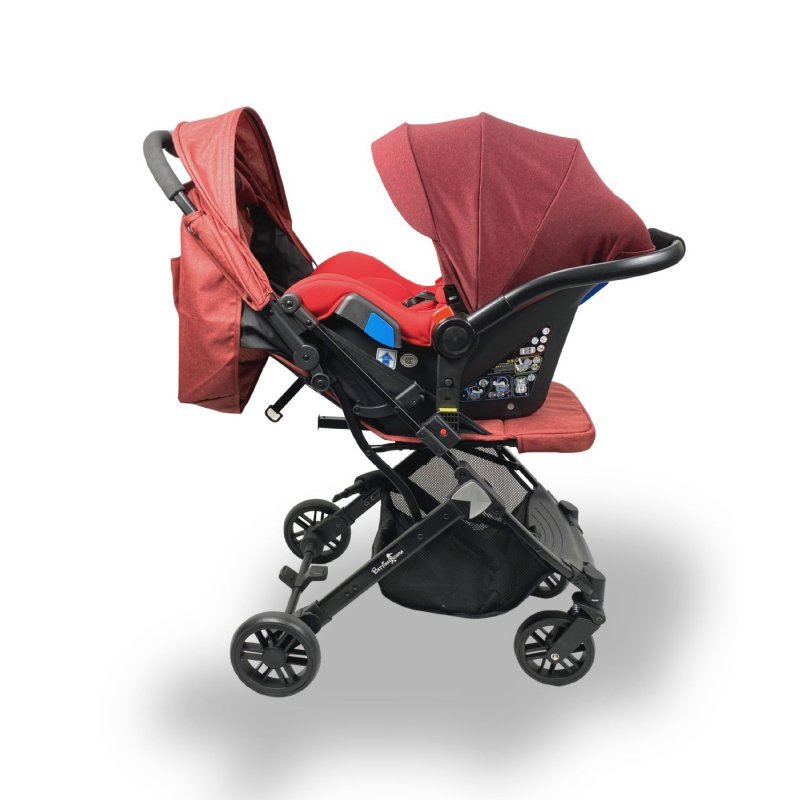
Travel Systems
These include a stroller and a compatible infant car seat, allowing seamless transitions from car to stroller. Convenient for newborns, though often heavier.
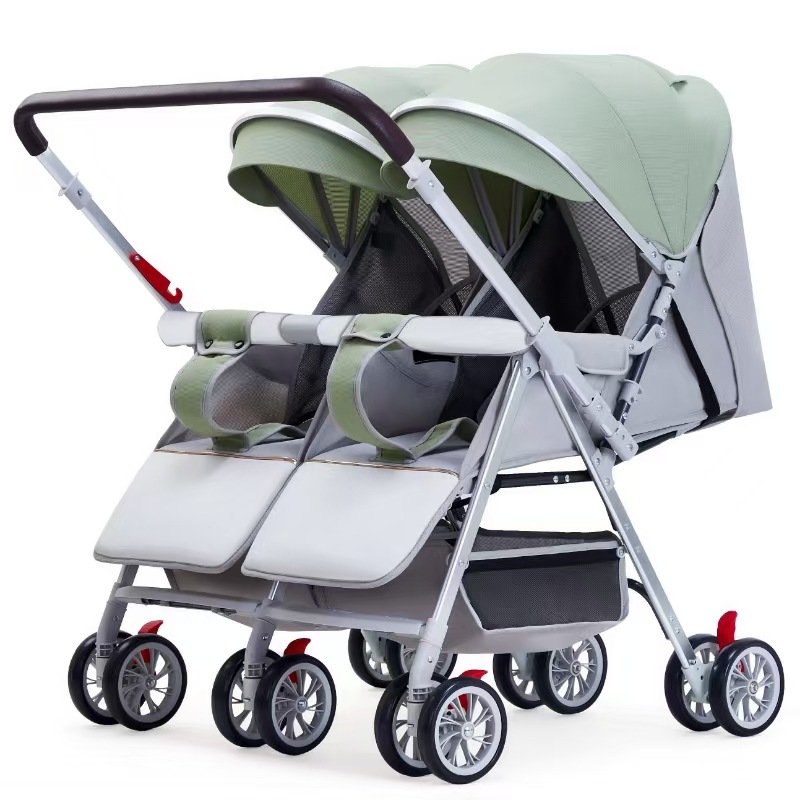
Double Strollers
Built for twins or siblings, they come in side-by-side or in-line configurations. They are functional but larger and less maneuverable in tight spaces.
Key Features To Consider
The following factors need to be considered if you want to know when your baby can sit in a stroller.
1. Safety First
- 5-Point Harness: Essential for securing your child safely.
- Safety Certifications: Look for EN 1888 or ASTM standards.
- Sturdy Frame & Reliable Brakes: Ensure stability and safety.
2. Smooth Maneuverability
Wheels: Air-filled tires for rough terrain, PU wheels for city use. Swivel wheels for easy turning.
Suspension: Provides a smoother ride on bumpy surfaces.
3. Child Comfort
- Recline Options: Multiple positions, including near-flat for newborns.
- Padding & Canopy: Adequate support and weather protection.
4. Parent Convenience
- Easy Folding: One-hand fold and self-standing design.
- Weight & Storage: Lightweight for portability, with ample storage space.
5. Long-Term Adaptability
- Reversible Seat: Allows children to face parents or forward.
- Car Seat Compatibility: Works with infant car seats for easy transitions.
Stroller Safety And Maintenance
Ensuring your stroller is safe and well-maintained is crucial for your child’s well-being. Always use the five-point harness whenever your child is in the stroller, even for short trips, to prevent them from standing up or slipping out. Engage the brakes fully whenever the stroller is stationary, especially on any incline, to prevent it from rolling away. Avoid the common mistake of hanging heavy bags or purses on the handlebars, as this can cause the stroller to tip over backwards.
Regular maintenance is equally important for long-term safety. Perform periodic checks for loose screws, parts, or any frame damage. Clean the fabric regularly according to the manufacturer’s instructions to prevent the buildup of dirt and germs. Frequently inspect the wheels for wear and tear and test the brakes to ensure they engage firmly and hold the stroller in place. By making these simple checks a habit, you ensure your stroller remains a secure and reliable space for your child.
Conclusion
In summary, the right stroller serves as far more than simple transportation—it becomes an indispensable partner in your parenting journey, facilitating daily routines and enabling cherished adventures. While trends and features may be appealing, always prioritize fundamental safety certifications and a design that genuinely aligns with your family’s unique lifestyle. By focusing on these core considerations, you’ll find a reliable stroller that truly simplifies your life, providing comfort and security for your child while making everyday moments more manageable and enjoyable for you.